

'%3e%3cpath%20fill='%23062a60'%20d='M24%200C10.748%200%200%2010.748%200%2024s10.748%2024%2024%2024%2024-10.748%2024-24S37.252%200%2024%200m11.64%2030.758a2.644%202.644%200%200%201-2.64%202.64H15a2.64%202.64%200%200%201-2.64-2.64V17.235a2.644%202.644%200%200%201%202.64-2.64h18a2.64%202.64%200%200%201%202.64%202.64zM14.303%2016.56v1.86L24%2024.742l9.697-6.322v-1.86L24%2022.785z'/%3e%3c/g%3e%3cdefs%3e%3cclipPath%20id='a'%3e%3cpath%20fill='%23fff'%20d='M0%200h48v48H0z'/%3e%3c/clipPath%3e%3c/defs%3e%3c/svg%3e)

Is osteoporosis hereditary?
Share
Getting a diagnosis of osteoporosis can be life changing. Naturally , most people want to look for a cause. But surprisingly, only 28% of people know that family history is the most important risk factor when it comes to their own chance of developing the condition.
More worryingly, only four in 10 (41%) would consider checking their own risk of the osteoporosis if their parent broke a hip.* Your genes determine the potential size and strength of your skeleton and if one of your parents has broken their hip, you’re more likely to break a bone yourself.
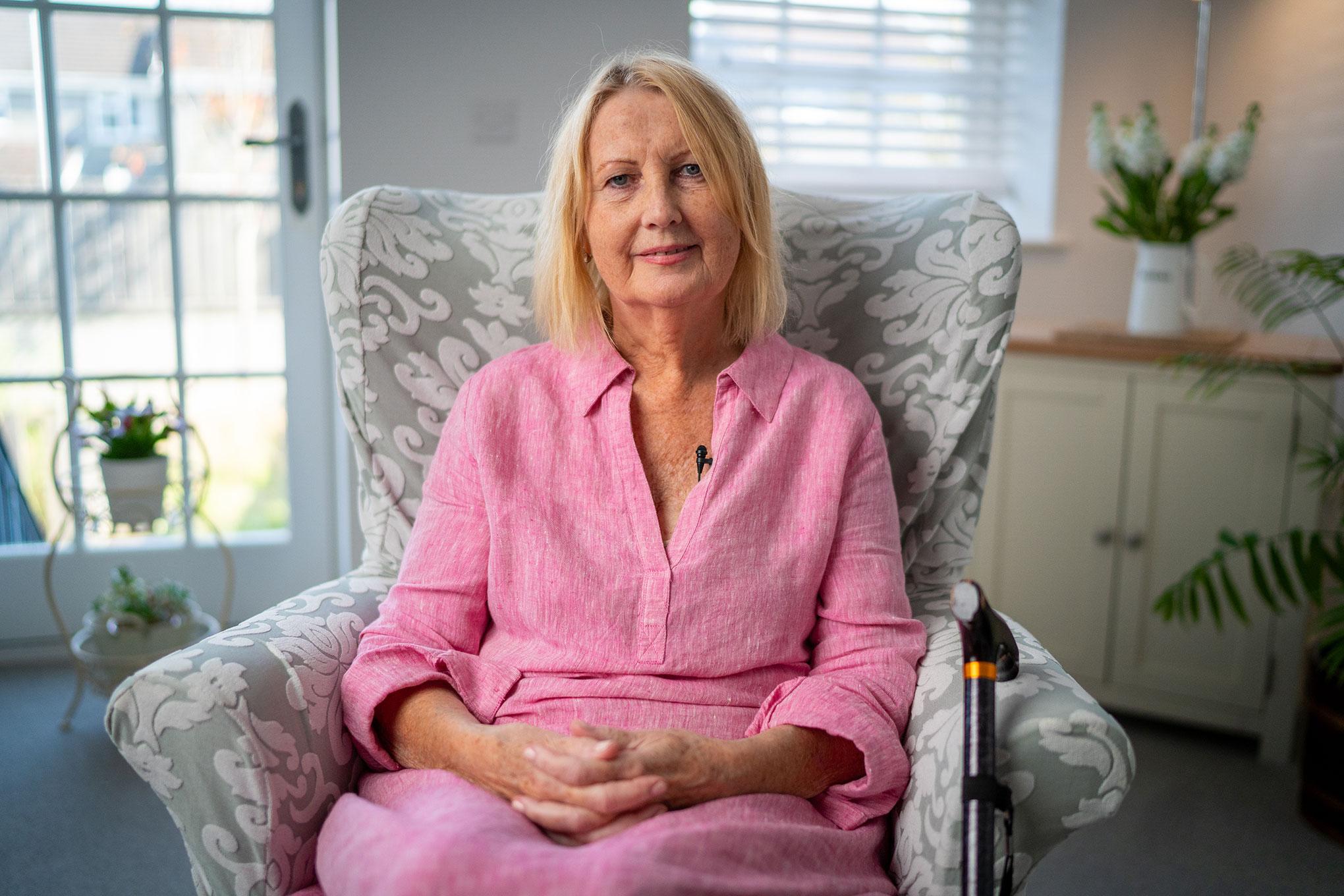
That’s what sparked ROS member Janet to check her risk of osteoporosis.
“Both my parents had hip fractures in their 80s through simple trips and falls at home,” she explains. “Neither had a formal diagnosis of osteoporosis that I was aware of, though I remember dad taking calcium tablets.
“I asked the GP for a bone density (DEXA) scan when I was in my early 50s, because of the family history of fracture. To my shock, I was just into the osteoporotic range in my spine. Now I take calcium supplements and I’m already on HRT. I’m very fortunate that I haven’t had a fracture but at least I know I’m at risk. I think the first step is to find out as much as you can.”
What are the genetic osteoporosis risk factors you can’t change?
Ageing, being born a woman, and having a history of broken bones are all risk factors for osteoporosis that you can’t change.
We know that 1 in 2 women will break a bone due to the condition and there are several reasons for that:
Women’s bones lose strength at a faster rate after the menopause due to declining oestrogen.
Women tend to live longer, on average, so are more likely to live with the lower bone strength that comes with age.
Women tend to have smaller bones than men. Having bigger bones is found to reduce the risk of broken bones.
However, 1 in 5 men will also break a bone due to osteoporosis and at least half will have an underlying reason for it.
What else can increase my risk of broken bones?
Certain medications are known to affect bone strength, like steroids, anti-epileptic medications, breast cancer and prostate cancer treatments.
Some medical conditions can also have an impact on bone health, including early menopause, coeliac disease and anorexia nervosa.
Can you reduce your risk if osteoporosis runs in your family?
Bone health is built over a lifetime. Taking positive action for your bones should start when you’re young – but it’s never too late to start. If osteoporosis runs in your family, it’s especially important to focus on habits that help prevent osteoporosis, such as:
Eating a balanced diet rich in calcium.
Getting enough vitamin D through sunlight or supplements.
Doing regular weight-bearing and muscle-strengthening exercise.
Avoiding smoking and limiting alcohol.
These steps can significantly lower fracture risk, even in people with a genetic predisposition.
When to speak to your doctor
Consider talking to your GP if you have a family history of broken bones, have multiple risk factors for osteoporosis, or have broken a bone easily yourself - for example after a simple trip or stumble, or a fall from standing height.
“I asked the GP for a bone density (DEXA) scan when I was in my early 50s, because of the family history of fracture. To my shock, I was just into the osteoporotic range in my spine. Now I take calcium supplements and I’m already on HRT. I’m very fortunate that I haven’t had a fracture but at least I know I’m at risk. I think the first step is to find out as much as you can.”
So, is osteoporosis hereditary?
Yes, but genetics are only part of the story. A family history raises your risk, but it doesn’t dictate your future.
With the right information and lifestyle choices, you can protect your bones and guard against life-changing breaks in the future.
Are there any osteoporosis risk factors you can change?
Yes! Inheriting these genes doesn’t mean osteoporosis is inevitable.
The NHS emphasises lifestyle choices have an impact on whether someone develops the condition. Many osteoporosis risk factors are modifiable, meaning you can take action to reduce your risk, even where a family history exists.
Key risk factors you can change include:
Low body weight
Smoking
Drinking too much alcohol
Slips, trips and falls
This means that two people with similar genetics can have very different bone health outcomes, depending on the lifestyle choices they make.
Check your risk now
Do you have family members with osteoporosis? Check your own risk in just three minutes with the Great British Bone Check. Developed by experts, it’s a free, quick, and simple way to understand your risk of broken bones.
Take the check here and start taking positive action for your bones today.
* Stats and wording from Bone Health Survey conducted by YouGov on behalf of the ROS July 2024. All figures, unless otherwise stated, are from YouGov Plc. Total sample size was 2100 adults. Fieldwork was undertaken between 26th - 29th July 2024. The survey was carried out online. The figures have been weighted and are representative of all UK adults (aged 18+).
Related articles