Understanding your spinal fracture
What a spinal fracture is and how it is diagnosed.
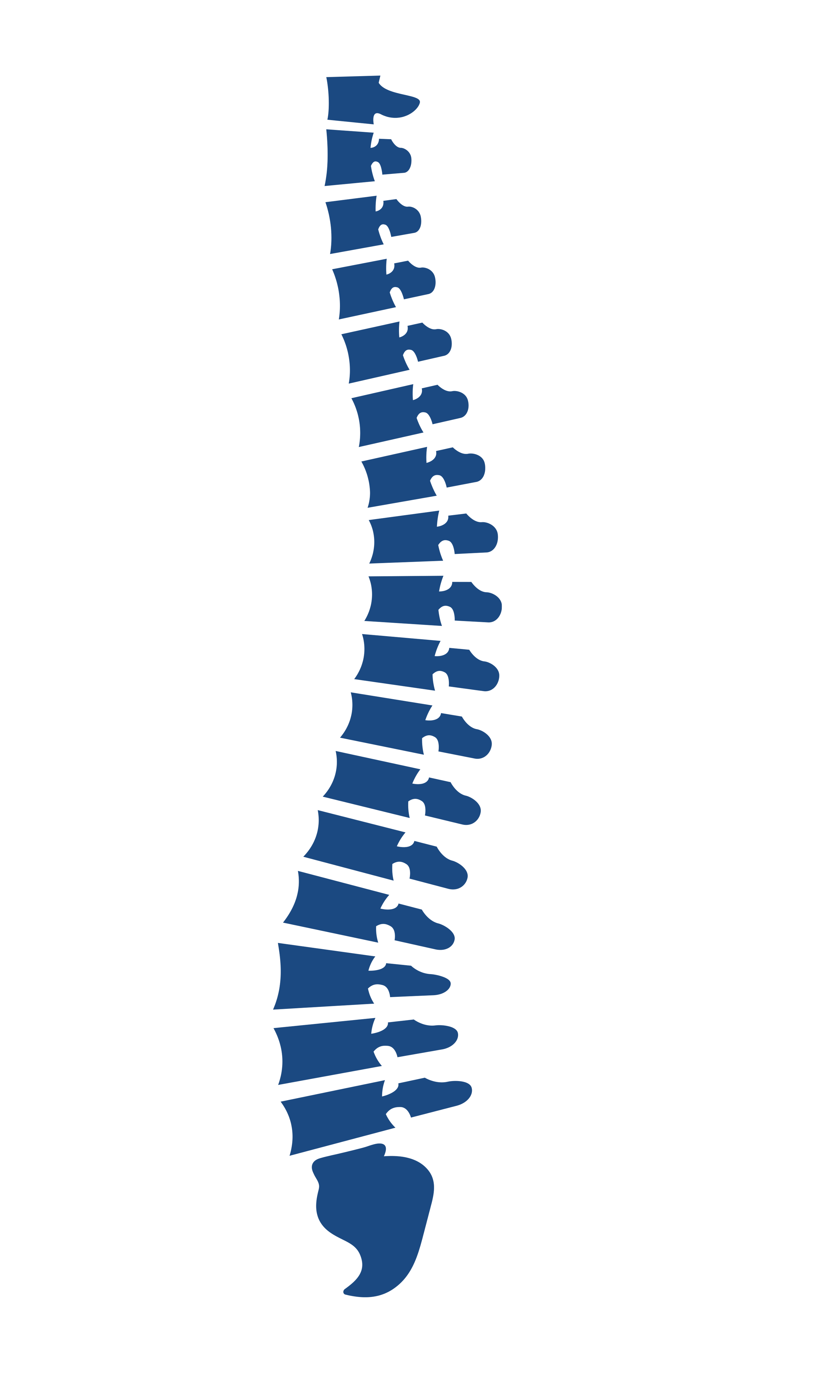
You might hear spinal fractures called vertebral fractures, compression fractures or wedge fractures. Sometimes people describe the bones as crushed, squashed or crumbling.
On this page, we explain what a spinal fracture is, what the main symptoms are, and how a spinal fracture is diagnosed.
This page is about spinal fractures caused by osteoporosis, rather than a high-impact injury. Osteoporosis is a condition that weakens bones. This means they can break more easily.
What is a spinal fracture?
Your spine (back bone) is the set of small bones that runs down the middle of your back. These small bones are called vertebrae. Your spine provides the main support for your body. It allows you to walk, bend and twist.
A spinal fracture is when one or more of these small bones (vertebrae) break. This is often due to osteoporosis. A spinal fracture caused by osteoporosis is different from a spinal injury caused by high impact. For example, a car accident, a serious sports injury or a fall from a height.
When you have osteoporosis, small breaks or cracks can develop in the vertebrae. Rather than breaking apart as other bones might, the vertebrae squash down on themselves. This is known as a compression fracture.
Types of spinal compression fracture
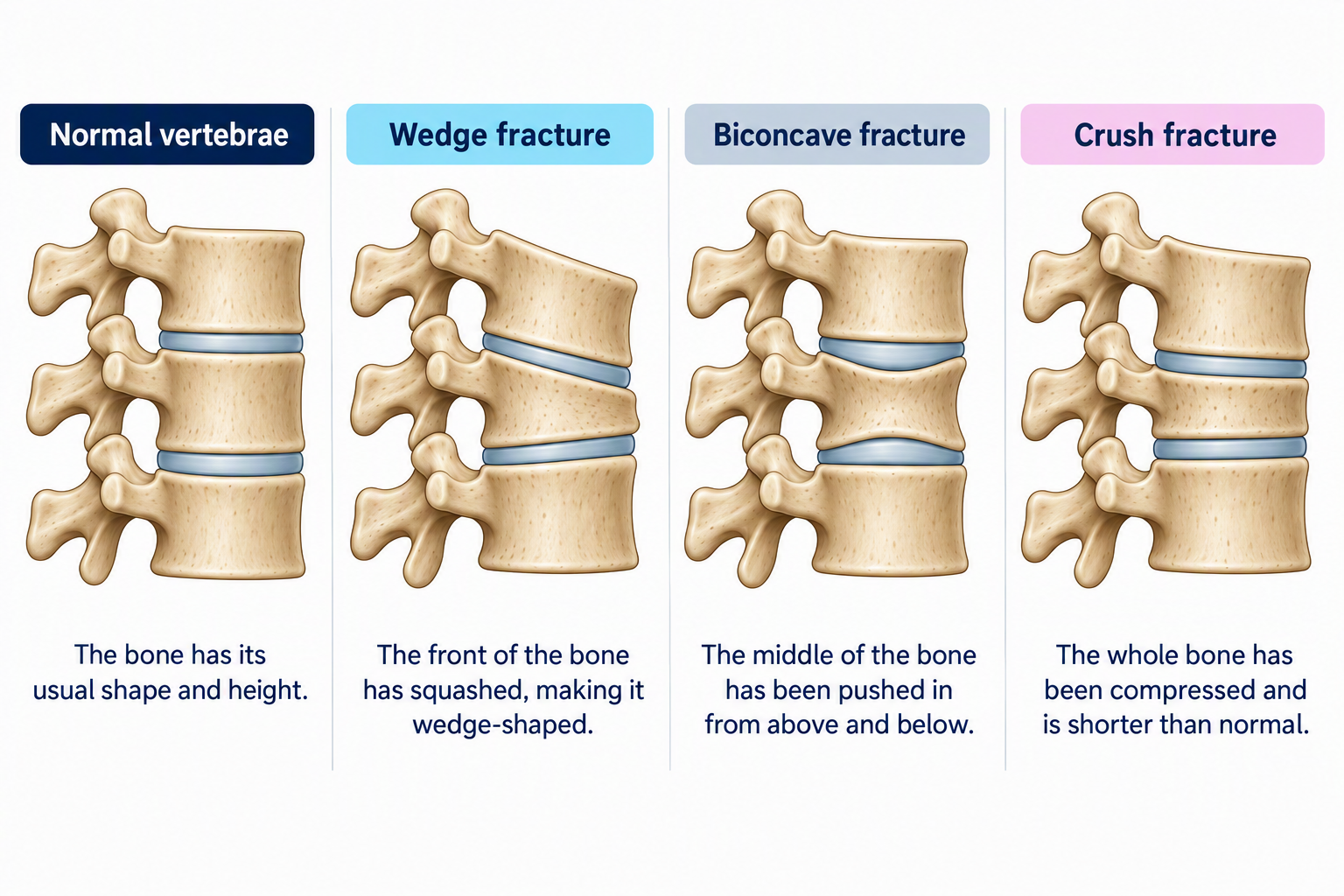
There are different types of spinal compression fracture:
A wedge fracture is when the front part of the bone becomes squashed forming a wedge shape. It’s sometimes called a wedge compression.
A biconcave fracture is when the middle of the bone pushes in from above and below.
A crush fracture is when the whole bone is compressed and is shorter than normal. It’s also called a crush compression or compression fracture.
You can have more than one type of spinal compression fracture.
How spinal fractures heal
When the broken bones in the spine heal, they stay compressed or changed in shape. They do not go back to how they were before. This is why some people with spinal fractures experience height loss and changes in the shape of their spine. The change in posture can affect the muscles and other tissues around the spine. This may contribute to ongoing pain in some people.
A spinal fracture due to osteoporosis is usually stable. This means the broken bone in your spine stays in place while it heals.
Stable spinal fractures:
usually heal without surgery or prolonged bed rest
do not damage the spinal cord
do not cause paralysis (being unable to move some or all of your body).
How common are spinal fractures?
Spinal fractures are the most common type of broken bone in people with osteoporosis. About 12 in every 100 people aged over 50 years have had a spinal fracture. The chance of a spinal fracture increases as you get older.
What causes a spinal fracture?
If you have osteoporosis, your bones are weaker and more likely to break. A spinal fracture can happen if you fall or lift something heavy. But for some people, it can happen with light movement. For example, bending, coughing, sneezing, twisting or even turning in bed.
If you have osteoporosis, make sure you know how to bend and lift safely. And take any measures you can to lower your chance of having a fall.
Find out what else you can do to lower your chance of breaking a bone.
What are the symptoms of a spinal fracture?
If you have one or more spinal fractures, you might have:
back pain
height loss
a curved spine or change in your body shape.
Not everyone who has a spinal fracture will have symptoms. Read more about how spinal fractures are diagnosed.
Back pain
Many people have no pain after a spinal fracture. They may not even be aware that they have a spinal fracture. Others may have back pain or muscle spasms. Pain can range from mild to intense.
Mild pain after a spinal fracture is often mistaken for something else, such as a pulled muscle, arthritis, or a normal part of ageing. Pain from a spinal fracture usually starts suddenly. And it can feel worse when you change position, lift something or lie flat.
We have more information about pain relief on our page about short-term recovery after a spinal fracture
Height loss and changes in body shape
Spinal fractures can also cause changes in body shape, although not everyone with spinal fractures will notice this.
Your spine may become curved, making the top of your back look hunched or rounded. This is called kyphosis (pronounced ky-FOH-sis). This can also cause your tummy to stick out. You may also notice that you have lost height, often more than an inch (2.5cm). The more spinal fractures you have, the more likely you are to notice these symptoms.
We have more information about body changes on our page about longer-term symptoms after a spinal fracture.
If you are worried that you may have had a spinal fracture, contact a healthcare professional such as your GP.
If your symptoms continue for another 2 to 3 weeks and you have not been diagnosed with a spinal fracture, contact your GP again.
If you have a spinal fracture, finding it early means you can start treatment sooner. This can help reduce your chance of breaking another bone.
How is a spinal fracture diagnosed?
If your doctor thinks you might have a spinal fracture, they will send you for a test. Tests that can show if you have had a spinal fracture include:
Most people will have an X-ray first to see if they have a spinal fracture. If a fracture is difficult to see on the X-ray, you might have a CT scan or an MRI. These tests look at your bones to see if you have any broken bones.
If you have a spinal fracture, your doctor should also check if you have osteoporosis. They will do this by doing a fracture risk assessment. You may also need a bone density (DEXA) scan.
For further details see our information on diagnosis and testing.
Some people with a spinal fracture do not have symptoms. For others, their symptoms may seem to have another cause, such as a pulled muscle. This means some spinal fractures are not always diagnosed. Sometimes a spinal fracture is found when you have an X-ray, CT or MRI scan for another reason.
Watch: Short videos about living well with spinal fractures
In these videos, you can hear the stories of people who are living with spinal fractures.
About this information

Get news and updates via your inbox
Don't miss our expert insights, recipes, and tips for living well with osteoporosis.

Connect with people living with osteoporosis
Our online community is a welcoming and safe space for you to share your experiences and find peer support.