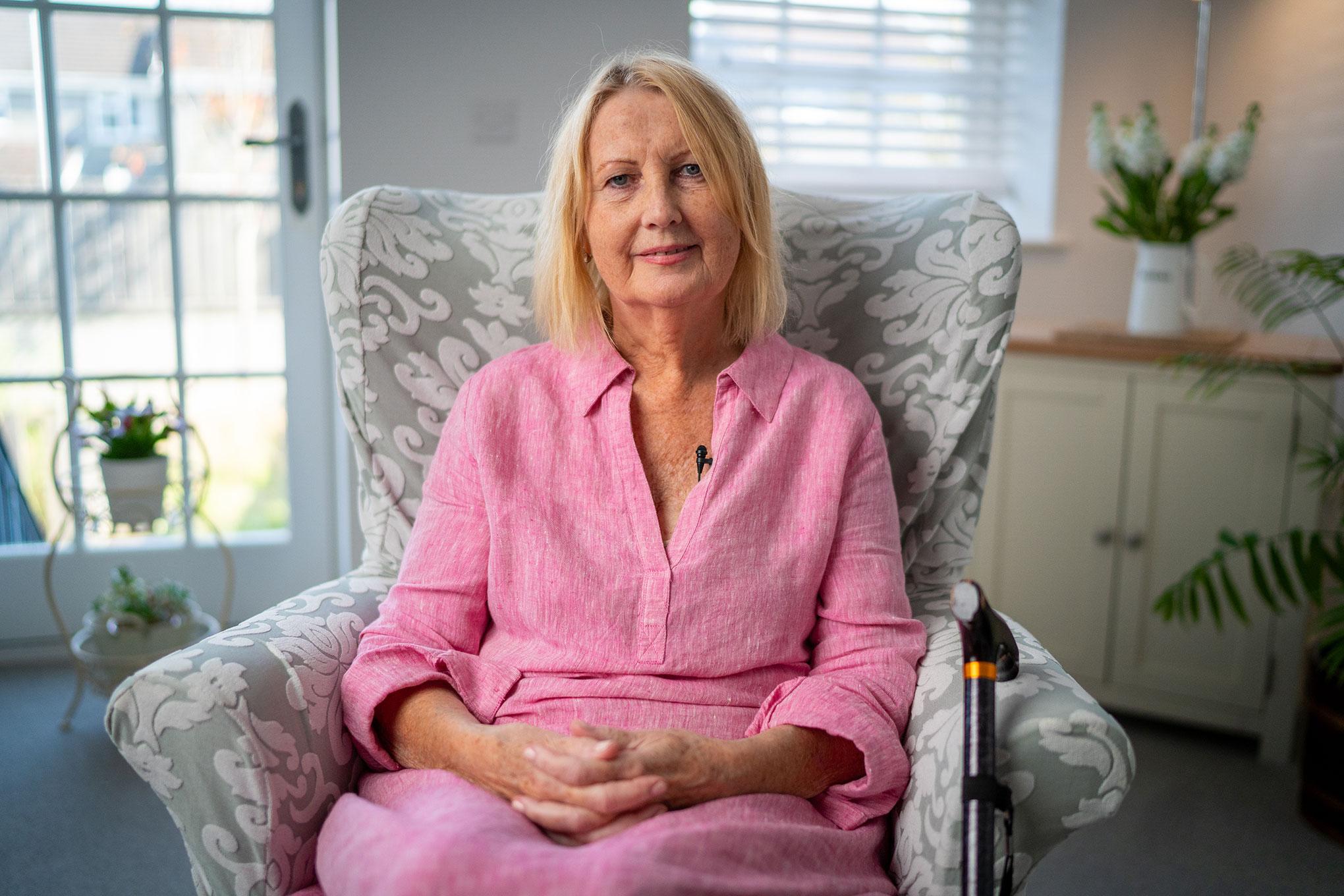
fracture risk assessments
Learn about fracture risk assessments and how they help healthcare professionals decide if you would benefit from an osteoporosis medicine.

A fracture risk assessment is a questionnaire doctors use to calculate your risk of breaking a bone. You may also hear these test being referred to as a FRAX® or QFracture® test, which are the tools doctors can use to complete the assessment.
On this page, we explain what a fracture risk assessment is, how it works and what your results may mean.
Do I need a fracture risk assessment?
You can talk to your doctor if you're worried about your risk of osteoporosis or breaking a bone.
They may suggest a fracture risk assessment if you are over 30, and:
you’ve broken a bone easily or
you've experienced menopause or
you take steroids or
you have risk factors for osteoporosis and broken bones or
your doctor needs to reassess your bone health and risk of breaking a bone, such as at a medication review.
The results of this test help your doctor or a specialist to decide whether you need further tests or an osteoporosis medicine. This can help to strengthen your bones and reduce your risk.
If you're under 30 and have risk factors for osteoporosis, your doctor will look at your risk and may refer you to a specialist for advice.
How does a fracture risk assessment work?
The assessment takes all the different risk factors for broken bones that you may have into account.
Risk factors for broken bones include:
being aged 50 or over
experiencing menopause
having low bone density
breaking a bone easily
certain medicines
certain health conditions
certain lifestyle factors
your family history.
Osteoporosis risk factors affect your bones in different ways. Some do this by reducing how much bone tissue your body makes and repairs, known as bone density. Others influence how strong your bone tissue is.
Considering all your risk factors together creates a complete picture of your overall bone strength.
What to expect from a fracture risk assessment?
A fracture risk assessment is in the form of an electronic questionnaire, which is completed by you and your doctor. Your doctor will sometimes ask you these questions without calling it a fracture risk assessment.
It includes questions about:
your age
your family history
health conditions
medicines you've taken or you take
previous broken bones
whether you've experienced menopause
your height and body weight
lifestyle factors, such as smoking and alcohol.
The assessment uses your answers to calculate your risk of breaking a bone in the next 10 years.
Your doctor or specialist uses this probability to work out whether you need an osteoporosis medicine.
If you haven't already, you may also be referred for a bone density scan.
Understanding your fracture risk assessment results
The result of your assessment is given as a percentage, which shows the probability of you breaking a bone in the next 10 years.
Your doctor uses this probability to work out whether you need an osteoporosis medication.
After your assessment
If your risk of breaking a bone is high, you may be prescribed an osteoporosis medicine, to help strengthen your bones.
The decision your doctor or specialist makes is based on national guidance, and the medicines available to treat someone of your age, gender and risk of breaking a bone.
In some cases, you may be advised to make lifestyle changes in the first instance, and invited back for another assessment in the future.
About this information
This information is being reviewed and updated. It remains available while we complete this work.

Get news and updates via your inbox
Don't miss our expert insights, recipes, and tips for living well with osteoporosis.

Connect with people living with osteoporosis
Our online community is a welcoming and safe space for you to share your experiences and find peer support.