Managing LongEr-term symptoms after a spinal fracture
Information about symptoms such as pain, height loss, curved back and fatigue.
Spinal fractures are also known as vertebral fractures, wedge fractures or compression fractures.
On this page, we describe the longer-term symptoms that some people may experience after a spinal fracture, and what can help.
This page is about spinal fractures caused by osteoporosis, rather than a high-impact injury. Osteoporosis is a condition that weakens bones. This means they can break more easily.
Ongoing pain
For many people, pain from their spinal fracture will be much improved after about 12 weeks. But for some people pain will continue after this, and it can be severe. Longer-term pain may happen because of changes in your spine shape, muscles and posture after a spinal fracture. Exercises to strengthen your back muscles and pain relief medicines may help.
Contact your GP if you have new back pain or back pain that will not go away.
See our information on managing long-term pain for more support.
Curved spine (kyphosis) and height loss
Your spinal fracture will heal. But the broken bone will not go back to its old shape. It will stay squashed. This can change the shape of your spine, especially if you have had more than one fracture.
You may notice that your upper back looks curved or hunched. This is called kyphosis (pronounced ky-FOH-sis). Because the bones are squashed (compressed), you may be shorter than before. And you may notice that your tummy sticks out.
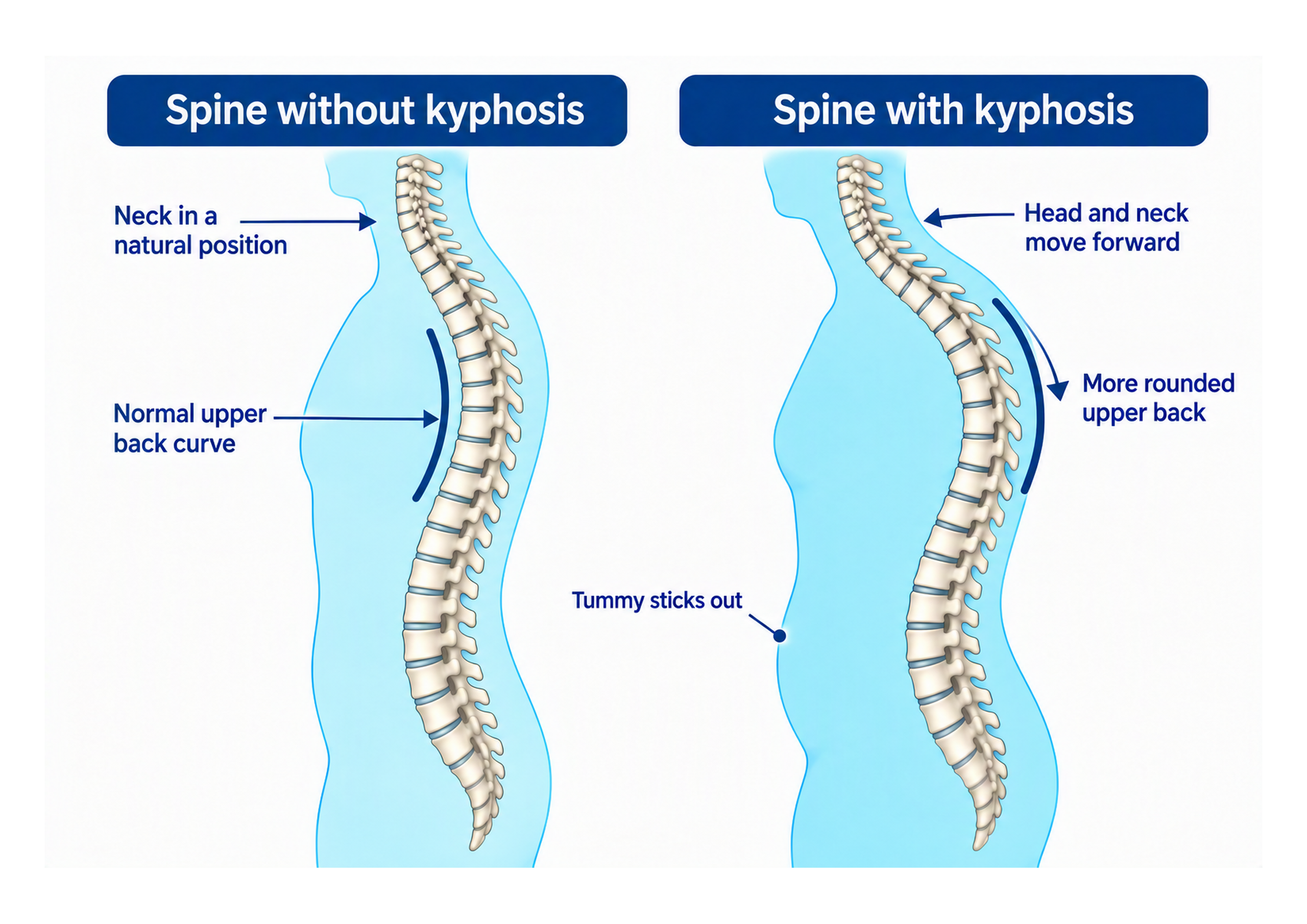
A curved spine (kyphosis) can also cause other symptoms, such as:
feeling short of breath
reduced appetite and other gut problems
urgently needing to pee (urinary urgency)
finding everyday activities harder
being more likely to fall over
emotional problems such as anxiety, depression, and low self-esteem.
Other things can also cause these symptoms. If you notice any of these symptoms, contact your GP.
Although these changes to your spine are permanent, exercises to help with posture may slightly improve some of these changes. And there are things you can do to manage the other effects of a curved spine.
Feeling short of breath
Some people find they feel short of breath. This may be caused by pain or changes in your body shape. These changes can limit the movement of your ribcage and diaphragm (the muscle that helps you breathe). But there are ways to make breathing easier.
Exercises that help your back move more easily and strengthen your muscles may help reduce the curve in your spine. This can make breathing easier.
Breathing exercises can also be useful. Breathing exercises that may help include:
Pursed lips breathing
Sit as upright as possible.
Breathe in gently through your nose and out through your mouth in a steady rhythm.
As you breathe out, purse your lips as if you’re about to whistle.
Try to make the breath out twice as long as the breath in.
Do not hold your breath between breathing in and breathing out.
Relaxed tummy breathing
Sit comfortably, with your neck, shoulders and back well supported.
Relax your shoulders and your chest.
Breathe in gently through your nose. As you breathe in, your tummy area and lower chest should push out (expand). Your upper chest should stay relaxed.
Breathe out slowly through your nose. Watch your tummy sink back down. Relax your shoulders and upper chest a little bit more each time you breathe out.
Pause slightly as you breathe out before the next breath begins.
If you have sudden difficulty breathing or are worried about your breathing, contact a healthcare professional.
Reduced appetite
If you have a curved spine (kyphosis), you may experience:
loss of appetite, leading to weight loss and poor nutrition
constipation
bloating
feeling or being sick.
Pain or some side effects from medicines can cause these things. Changes in your body shape may also make it harder for food to move through your gut. Other things can also cause these symptoms. If you notice any of these symptoms, contact your GP.
People with kyphosis often feel full after they have only eaten a small amount. This loss of appetite means that you may lose weight. And losing weight can lead to you losing bone and muscle strength.
There are some things you could try to increase the amount you eat:
eat smaller meals more often
try adding foods that are high in energy such as cheese, nuts or seeds
have healthy snacks between meals that are easy to prepare.
You can find tips to help you gain weight on the NHS website.
Speak to your doctor if you have a poor appetite and you are losing weight. They may be able to refer you to a dietitian or an occupational therapist (OT).
Bladder control
Your change in body shape can put pressure on your tummy and bladder. You may need to pee urgently and sometimes not reach the toilet in time. You may also leak pee when there is pressure on your bladder, such as when you cough or sneeze.
Contact your GP if you notice these changes. They can check what might be causing these symptoms. They can give you advice on pelvic floor exercises and local services.
Some NHS continence clinics offer services for people with bladder control problems. You may be able to refer yourself to your nearest service or ask your GP to refer you. The clinic may be able to:
provide advice
teach you pelvic floor exercises
arrange supply of free continence pads
give you additional support.
You can find more information about managing bladder problems on the NHS website and from the Bladder & Bowel UK website.
Managing changes in body image
These changes to your body shape can affect how you feel about yourself. Some people feel upset, frustrated, or less confident after spinal fractures. They may feel self-conscious about changes to their body shape.
Find out more about body image and self-esteem in our information on clothing, body image and osteoporosis.
Finding everyday activities harder
You might find it harder to do things like washing and dressing, cleaning, shopping, or cooking. These can be even more difficult if you have no support at home.
Your doctor may be able to refer you to occupational therapy. An occupational therapist (OT) can help you find different ways of doing these things that work for you. And they can help you to get more support.
We have more information about support at home for people who may need help with everyday activities.
Increased chance of falling over
If you have a curved spine (kyphosis), you are more likely to fall over and break another bone.
Improving your balance and strength can help to reduce your chance of a slip, trip or fall.
Age UK also has information on preventing falls, including a guide on Staying steady (PDF).
Fatigue
Fatigue is extreme tiredness that does not go away with your usual amount of sleep. Some people experience fatigue after a spinal fracture. This may be because of:
pain causing poor sleep
pain and anxiety causing tiredness
stress and worry.
Things you can do to help fatigue include:
speak to a healthcare professional if your pain is not controlled
break down activities into smaller steps, balancing activity and rest (pacing)
create healthy habits to help you sleep well.
Visit the NHS website for practical tips to help you create healthy habits and routines that can help you sleep. This is sometimes called sleep hygiene.
Can a spinal fracture affect my life expectancy?
Most people with osteoporosis and spinal fractures recover well and have a normal life expectancy. Symptoms such as a curved spine (kyphosis), height loss and pain can be managed. They do not mean that your life will be shortened.
But, having a spinal fracture increases your chance of breaking another bone, including a hip. Hip fractures can have more serious effects if you are older, frail or have other long-term health conditions. For example, you may need to spend more time in hospital or find it harder to move around. You might also lose some independence. Sometimes broken bones can increase the risk of dying earlier than expected. These things will not happen to everyone who has a spinal fracture.
There are practical steps you can take to help keep your bones strong and lower your chance of breaking another bone. These include taking an osteoporosis medicine and keeping active.
Thinking about life expectancy or dying can feel upsetting. You may find it helpful to get emotional support, or talk about your concerns with someone you trust.
Watch next: Films about living with spinal fractures
About this information

Talk to a specialist nurse
If you can’t find the information you need, our specialist nurses can answer your questions or concerns about osteoporosis.

Connect with people living with osteoporosis
Our online community is a welcoming and safe space for you to share your experiences and find peer support.