Broken hips, wrists and other bones
What to expect when recovering from a broken bone, including how long bones take to heal and what treatment you may have.

Osteoporosis does not affect the healing process of bone. So if you do break a bone, it can heal as normal.
On this page, we explain how broken hips, wrists and other bones are treated and how to speed up the healing process.
The healing process for broken bones
Some broken bones need an operation to help them heal, while others get better on their own. A broken bone usually takes around 6 to 12 weeks to heal, although it can take longer.
There are things you can do to speed up the healing process, including:
eating a healthy balanced diet, with plenty of protein
avoiding smoking, which limits the blood supply to your bones
resting and taking it slow.
We understand that breaking a bone can be painful and frustrating. If you're in pain right now, remember that in most cases, the pain does pass.
Broken hips
If you've broken your hip, it should heal as normal. If your general health is poor when you break your hip, it may take longer for you to recover after surgery and return to living independently.
What does treatment involve?
A broken hip usually needs an operation to fix or replace the top of the thighbone.
The operation can be carried out under a general anaesthetic, or by giving an injection into your spine to numb the lower half of your body.
The operation should happen as soon as possible after you break your hip. But it may be delayed if you have a urine or chest infection, anaemia or heart problems.
What does recovery involve?
You should get up and about as soon as possible after your surgery – usually on the day after the operation. A physiotherapist will usually support you to get out of bed and use a walking frame. This will give yourself the best chances of recovery. It will also help to reduce your chances of problems like a chest infection or blood clots.
Take it steady at first. You'll gradually become more mobile as the days pass.
To help with the pain after your operation, you will either have regular pain-relieving injections or an analgesia pump. This is a pump you control yourself to give safe amounts of medicine into a vein.
The length of time you stay in hospital can be between five days and three weeks. The exact amount of time will depend on how fit and healthy you were before breaking your hip.
You may need a period of rehabilitation after your operation before you can go home safely. Your physiotherapist can recommend some suitable exercises to help with your recovery.
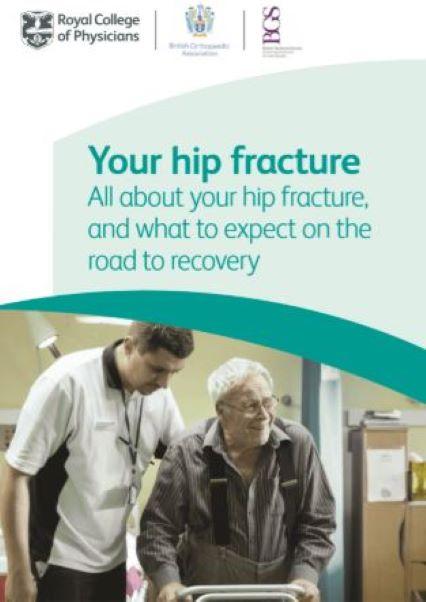
The Falls and Fragility Fracture Audit Programme has some useful information on hip fractures. Read their booklet on hip fractures and what to expect on the road to recovery.
They also have a guide for families and carers. This guide has information on how to support someone during their recovery.
Broken wrists
If you've broken your wrist, it should heal as normal – usually within 6 to 12 weeks. It is unlikely to cause any long-term complications.
What does treatment involve?
In most cases, you'll have a plaster cast fitted in hospital. This will stabilise the break so that it can heal properly. You should be able to go home once your plaster cast has been fitted.
Occasionally, you might need an operation to realign the bones. The surgeon will use wires to hold the bones in the correct position. A partial cast is applied during the operation. After a few days, once any swelling has gone down, you'll have a full cast fitted.
How long does it take to heal?
The plaster cast stays on until the bone has healed. This usually takes about six weeks.
Once the cast is removed, you can start doing exercises to help strengthen your muscles and return to normal activities.
Possible long-term complications
Occasionally, a broken wrist can cause longer-term problems, such as:
osteoarthritis of the wrist
You can reduce the chance of developing CRPS by doing any exercises that are recommended to you before and after the cast is removed.
Watch: Referral to a fracture liaison service (FLS)
At some hospitals, you may be referred to a fracture liaison service (FLS) after breaking a bone. In this video, we explain what an FLS is, and what to expect if you're referred to one.
Watch: How to live well with fractures
In this video, leading experts Professors Emma Clark, Terence O’Neill and Karen Barker discussed ways to manage the impact of painful broken bones. This video is part of our #BoneMatters series.
Watch: Equipment to help you live well with broken bones
In this video, we discuss the equipment that may be useful if you're living with fractures with Rheumatology Occupational Therapist Jacqueline Sherwood and Lead Volunteer Advocate Philippa Russell. This film is part of our #BoneMatters series
Daily living after fractures
Download our fact sheet, Daily living after fractures.
About this information

Get news and updates via your inbox
Don't miss our expert insights, recipes, and tips for living well with osteoporosis.

Connect with people living with osteoporosis
Our online community is a welcoming and safe space for you to share your experiences and find peer support.